
Maintenance and Replacement of a Backup Source Battery
A backup source for a boiler or circulation pump is only as good as the battery sitting inside it. The source's own electronics - the charging circuit, the inverter, the control board - usually last ten or more years without major problems. The battery, however, is a consumable part, just like tyres on a car, and its real lifespan in practice is measured in years, not decades. While it's new, it can comfortably power a circulation pump or a boiler's control electronics for 60-90 minutes during an outage. Once it ages without anyone noticing, the same source might last only 5 minutes during an outage - and that's exactly at the moment it hurts most, during a storm or a frost, when power cuts happen most often.
In this article we go through how the battery in a backup source works, what types are used in practice, how to recognise it's running out, what regular maintenance it needs, and how the replacement itself works step by step - including what to watch out for in terms of safety and disposing of the old unit.
How the battery in a backup source actually works
Most backup sources for boilers and circulation pumps work on the so-called line-interactive or offline UPS topology. In simple terms this means that during normal operation, electricity from the mains flows through the source directly (or almost directly) to the boiler, while part of the energy is continuously used to keep the battery charged at 100%. So the battery isn't "in reserve" in the sense of sitting off to one side somewhere - it's constantly connected to the charging circuit and constantly subjected to a slight load from heat and chemical processes, even if it's never actually used to power the load.
When mains power fails, the control electronics register it within milliseconds to a few tens of milliseconds and switch the boiler's or pump's power supply to the inverter, which converts the battery's DC voltage (typically 12 V) into the 230 V AC the boiler or pump needs. This is exactly the moment that reveals the battery's real condition - a new battery delivers full power without a voltage drop, an old battery may have internal resistance so high that the voltage sags under load and the source either shuts down or delivers a much shorter backup time than it should.
That's exactly why manufacturers and retailers recommend not treating the battery as part of the source "for life", but as a separate item that needs to be monitored and replaced at regular intervals - regardless of whether the source was actually used during the year or just stood quietly connected in the utility room.
Types of batteries used in backup sources for boilers
In practice, small and medium household backup sources mostly use lead-acid batteries in two versions - AGM (Absorbent Glass Mat) and gel. Smaller, more expensive sources, or newer higher-power models, may also use lithium (LiFePO4) cells.
AGM batteries
AGM is today the most widespread type in backup sources of this category. The electrolyte is absorbed into a glass mat between the plates, the battery is maintenance-free in the sense of not needing water topped up, sealed (VRLA - Valve Regulated Lead Acid) and resistant to vibration. Typical lifespan with correct use and an ambient temperature of around 20 °C is 3 to 5 years. At a higher operating temperature (for example in a boiler room next to the boiler, which is typically warmer than the living room) the lifespan shortens - as a general rule, every +10 °C above the recommended 20-25 °C roughly halves a lead-acid battery's lifespan.
Gel batteries
Gel batteries have their electrolyte thickened into a gel form. They're somewhat more resistant to deep discharge than AGM and tolerate frequent discharge/charge cycles a bit better, which is an advantage especially where power outages happen often. The price is slightly higher, and the lifespan is in a similar range to AGM, i.e. 3 to 5 years, with good-quality units and careful use even 5 to 7 years.
Lithium (LiFePO4) batteries
Lithium iron phosphate batteries are still a minority but growing solution in this category. The main advantages are a significantly longer lifespan (commonly quoted as 8 to 10 years, or 2000 and more charge cycles compared to 300-500 for lead-acid types), lower weight and more stable performance even at a lower state of charge. The downside is a higher purchase price, and the fact that not every older backup source is ready for a lithium battery - the control electronics and charging curve are different for lithium than for lead-acid types, so a straight "like-for-like" swap isn't always possible without consulting the source manufacturer.
How to tell the battery is running out
Unfortunately, a battery usually doesn't give any visible warning as it gradually ages - an indicator light in the utility room doesn't start flashing just because the internal resistance has risen by 30%. Still, there are several concrete signals worth watching for:
- Shorter backup time during a real outage. If, during the last power outage, the boiler or pump "held on" for noticeably less time than during previous outages, that's the strongest sign of wear.
- The source's audible or LED signalling. Most sources have a built-in self-test that periodically briefly loads the battery and evaluates its condition - low voltage or a failed test is reported by beeping or a flashing LED (depending on the specific model, check the manual).
- Battery age above 4-5 years for AGM/gel, even if nothing seems wrong on the surface - a preventive replacement once the recommended time has passed is a cheaper insurance policy than waiting for failure during a real outage.
- Bulging or deformation of the battery case - visible bulging of the sides is a clear signal for immediate replacement, the battery must not be used any further.
- Smell or traces of electrolyte leakage around the terminals or at the bottom of the source's housing - again a reason for immediate replacement and careful handling.
- Unusually fast charging to 100% after a short test - a degraded battery has lower real capacity, so it "charges up" faster, but the same percentage represents much less real energy.
Regular maintenance - what's worth doing on an ongoing basis
Maintaining a backup source and its battery isn't complicated, but it has to be regular - a one-off check at installation with no further monitoring is almost as risky as no maintenance at all. The recommended rhythm that has proven itself in practice:
Once a month
A visual check of the source - no bulging, no smell, indicator lights on correctly (no error message). If the source has a manual test button, press it and check that it completes without an error.
Once a quarter
A real test under load - if it's safe and the source allows it, disconnect the source from the mains for a short time (2-3 minutes) and check whether the boiler or pump stays running without problems and what voltage the source reports. Also check the battery terminals - they should be clean, free of white or greenish corrosion, and tightly secured.
Once a year
A more thorough check including measuring the battery's resting voltage with a multimeter (it should be close to 12.6-12.8 V for a fully charged lead-acid battery), and recording the date of the check and the values measured - ideally in a simple notebook or a note on your phone kept by the boiler. This simple "battery log" turns out in practice to be the most reliable way to notice gradual deterioration before a real failure occurs.
Once the recommended lifespan has passed
Regardless of how the battery looks on the outside, after 4-5 years for AGM/gel (or according to the specific model's manufacturer data), it's worth replacing the battery preventively. The cost of a new battery is negligible compared to the risk of the boiler or circulation pump (for example in a system with a heat pump, where a loss of circulation can cause frost damage in winter) being left without backup exactly when it's needed most.
Battery replacement step by step
Replacing the battery in a backup source is, for "plug and play" types (common in most home UPS sources for boilers), a simple job that even a moderately handy user can manage without problems. The procedure is as follows:
1. Switch off and disconnect the source
Turn the source off with the main switch and unplug it from the mains. Wait at least a few seconds for any capacitors in the circuit to discharge.
2. Open the cover
Most small and medium sources have the battery compartment accessible via a separate panel or screws on the bottom/rear - you don't need to take apart the whole electronics unit. Follow the instructions for your specific model.
3. Disconnect the old battery
Disconnect the negative (-) terminal first, then the positive (+) terminal. This order matters for safety reasons - it reduces the risk of a short circuit if you accidentally touch a metal part of the device with a tool. Remove the battery carefully, being mindful of its weight (smaller units weigh 2-4 kg, larger ones can exceed 20 kg).
4. Check the new battery's compatibility
Check that the replacement battery has the same voltage (typically 12 V), the same or a suitable capacity in Ah (ampere-hours), and similar physical dimensions so it fits the original battery's compartment. When switching from a lead-acid to a lithium battery, we recommend verifying compatibility directly with the source manufacturer or the retailer's technical support.
5. Connect the new battery
The procedure is the reverse of disconnecting - connect the positive (+) terminal first, then the negative (-) terminal. Check that the terminals are clean and tightly secured, with no play.
6. Close the cover and test
Close the source, plug it back into the mains, switch it on, and let the new battery fully charge for several hours (ideally 24 hours) before the first real test under load. Once charged, perform a short disconnect-from-mains test to verify the backup works.
7. Disposing of the old battery
Both lead-acid and lithium batteries count as hazardous waste and must not be thrown into ordinary household waste. Take them to a collection point (many electronics shops and petrol stations have collection boxes), or when buying a new battery, ask the retailer about free take-back of the old unit.
Recommended replacement batteries and backup sources
When choosing a replacement battery, or a whole new backup source, it's worth basing the decision on what type of boiler or pump you're backing up and how long a backup time you actually need. Below are three specific models from our range that are a popular choice in practice for backing up a boiler room.
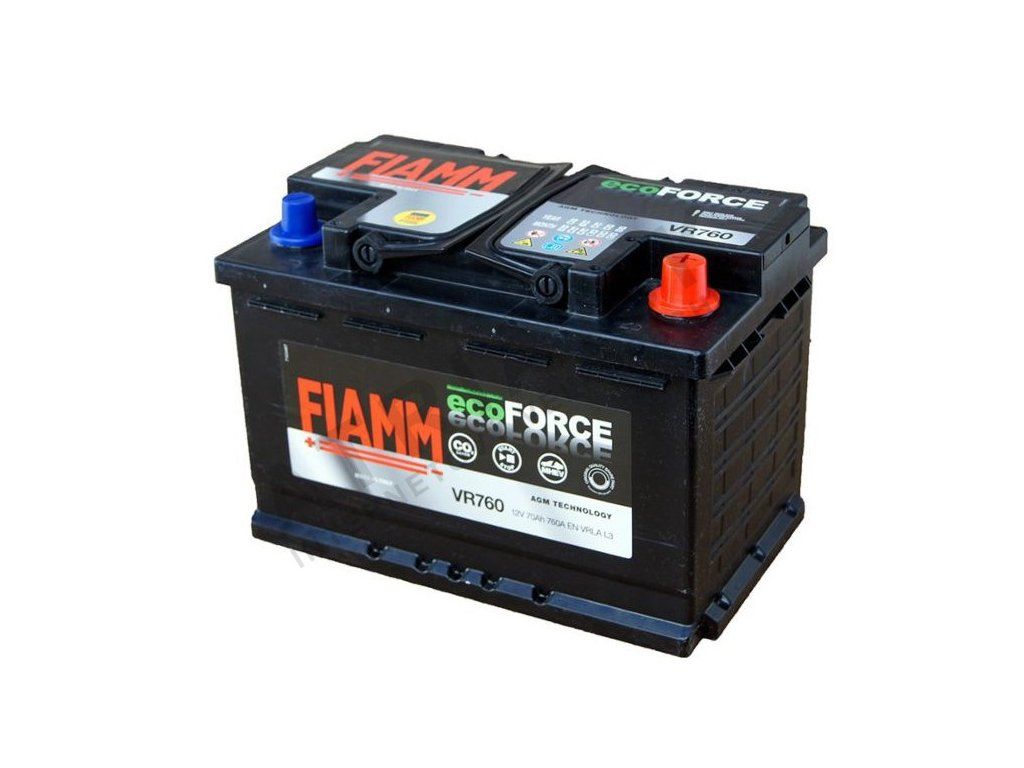 |
FIAMM ECOFORCE AGM VR 760 - a quality AGM battery from an established Italian manufacturer, suitable as a direct replacement in most common backup sources for boilers and circulation pumps. Maintenance-free design (VRLA), a good choice for a preventive replacement once the recommended lifespan has passed. Price from 178.56 EUR. |
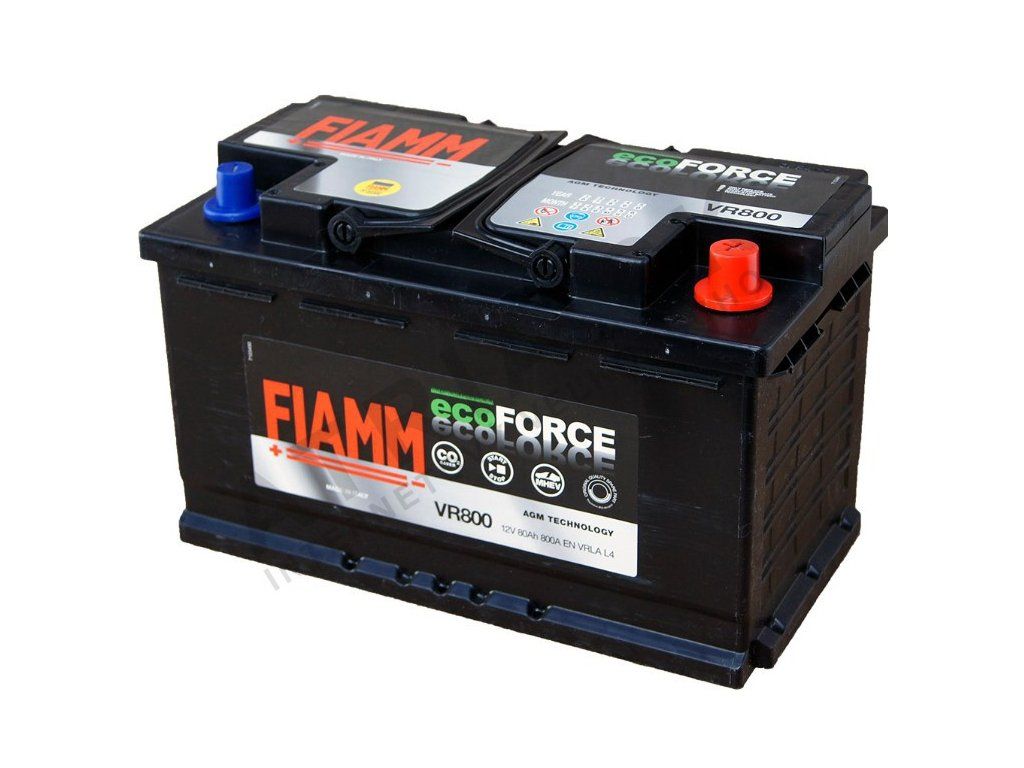 |
FIAMM ECOFORCE AGM VR 800 - somewhat higher capacity than the VR 760 model, worth choosing especially for systems with a higher draw (for example a boiler with several circulation pumps at once) or if you want to extend the real backup time during an outage. Price from 195.88 EUR. |
 |
FIAMM ECOFORCE AFB TR 720 - a more affordable replacement battery, suitable where you want a reliable, proven replacement without unnecessarily high capacity beyond your actual need. A good choice for an ordinary home boiler without other energy-hungry appliances on the same circuit. Price from 146.58 EUR. |
If you're not dealing with just the battery but the whole backup source (for example because of a non-battery-related fault, or when moving to a more powerful model), complete solutions such as the Avansa 500 W from 199.51 EUR are also worth considering - they already include a battery and are ready for immediate installation.
Safety when handling batteries
Even though it's "just" a 12 V battery, a few basic safety rules apply when handling it that shouldn't be underestimated:
- Don't use metal tools without an insulated handle when disconnecting and connecting terminals - the risk of a short circuit between the positive and negative terminals is real, a battery can deliver a high current during a short and the tool can become red hot.
- Don't bring an open flame or a sparking source near the battery - especially with older or damaged units, flammable gas (hydrogen) can be released during overcharging.
- If the battery case is bulging, damaged or leaking, wear gloves and protect your eyes, the electrolyte is corrosive.
- Don't store or handle the battery in extreme heat (for example right next to the boiler's heat source, where the temperature can exceed the manufacturer's recommended values).
- If in any doubt, especially with larger, higher-power sources, contact a service technician - the cost of a service call is negligible compared to the risk of injury or damage to the device.
How to extend the battery's lifespan
A few simple habits can extend a battery's real lifespan by a year or two above average:
- Placing the source in a cooler part of the room - if possible, don't place the source directly above the boiler or in the hottest corner of the boiler room, thermal stress is the main accelerator of lead-acid battery ageing.
- Regular tests under load - paradoxically, a battery that's occasionally actually discharged and recharged (in a controlled test) stays in better condition than a battery that just "sits" at 100% charge, unused, for years.
- Good ventilation around the source, so heat from the charging process doesn't accumulate.
- Sticking to the recommended preventive replacement interval instead of waiting for failure - an older battery under load doesn't just fail sooner, it can also overload the source's charging circuit, indirectly shortening the source's own lifespan too.
Frequently asked questions
How often does the battery in a boiler's backup source need replacing?
For ordinary AGM or gel batteries it's usually every 3 to 5 years, even if the battery shows no outward problem. For lithium (LiFePO4) batteries the interval is longer, typically 8 to 10 years. The exact figure can always be found in the specific model's documentation.
Can a different battery than the source manufacturer recommends be used?
Yes, as long as it matches the voltage (usually 12 V), has a suitable or higher capacity in Ah, and physically fits the battery compartment. When switching between types (for example from lead-acid to lithium), it's worth first checking the charging curve's compatibility with the source manufacturer's technical support.
What happens if I don't replace the battery in time?
Nothing happens until a power outage occurs. At that moment, though, it may turn out that the source only delivers backup power for a few minutes instead of the planned hour, or doesn't start up at all. For boilers with a circulation pump, this can mean a risk of the system freezing in frosty weather if the outage lasts longer and the backup fails exactly then.
Do I need to discharge the battery to zero before replacing it?
No, you can carry out the replacement at any time regardless of the old battery's state of charge. We only recommend disconnecting it safely in the correct order (negative terminal first) and taking it to a hazardous waste collection point as soon as possible.
How do I tell the problem isn't the battery but the source itself?
If the same problem persists after replacing the battery with a proven new one (short backup time, error message, non-functional charging), it's very likely a fault in the source's own electronics, not the battery. In that case it's worth contacting service or considering replacing the whole source.
Is it worth switching from a lead-acid to a lithium battery?
When planning a replacement after several years of operation, this can make sense especially if you want less frequent replacement (once every 8-10 years instead of every 3-5 years) and don't mind the higher upfront cost. Always first check whether your specific source's control electronics support it.
Related topics
- How to choose a backup source for a boiler
- How much backup power do I need
- Most common failures of backup sources
- How long does a backup source last during a power outage
You can find the complete range of backup sources and replacement batteries in the category Backup power sources for boilers, pumps.
Do you have a question on this topic?
Can't decide, or dealing with a specific situation in your household? Write to us - we're happy to help.