
Backup Power Source vs. Home Generator
Backup power source vs. home generator
A power outage on a winter night can turn a warm home into a cold room faster than most people think. A condensing boiler, circulation pump, control electronics, flue gas fan and the thermostat itself all need electricity to work - without it, even a gas boiler simply stops, even though gas is still in the pipe. That's exactly why more and more family house owners are asking whether they should buy a small backup source (essentially a UPS - uninterruptible power supply) directly for the boiler, or rather invest in a more versatile home generator. There's no one-size-fits-all answer, because the two systems address slightly different situations, have different price levels and different levels of convenience in use. In this article we'll go through, in practical terms, how both solutions work, when it makes sense to reach for one, when for the other, and when even for a combination of both.
Why bother with a power outage when it comes to heating at all
An ordinary gas or electric boiler today almost always contains electronics - a control board, a circulation pump, a flue gas fan, an ignition unit and often also a module for communicating with the room thermostat. When power is lost, the boiler switches off as a safety measure. That's fine and it's designed correctly that way - a boiler must not fire without the electronics in control. The problem arises when the outage lasts longer and the temperature in the house starts to drop, or when frost threatens to freeze water in the pipework or in the boiler's heat exchanger. If the indoor temperature drops below freezing, pipes, the heat exchanger or fittings can burst - and repairing such damage usually costs substantially more than a backup power solution would.
The second group of reasons relates to the circulation pump of an underfloor or radiator system. Even if the boiler could keep running (for example with a fireplace with a water-heating exchanger), without the circulation pump the heat won't reach where it needs to go, and there's a risk of local overheating of the boiler or exchanger. The third group of reasons concerns households that, besides heating, also need backup power for fridges, freezers, well pumps or a home sewage treatment plant - here we're already talking about a broader solution that goes beyond the boiler itself.
It's precisely the scope of what you want to keep running during an outage that determines whether a small backup source is enough, or whether a generator is more suitable.
How a backup source (UPS) for a boiler works
A backup source in the context of heating is, in principle, the same kind of device you know from offices with servers or computers - just sized for a boiler and circulation pump. It consists of a voltage inverter, control electronics and one or more storage batteries, most often lead-acid AGM or gel types, designed for repeated discharging and charging (so-called cycling). The device is permanently connected between the socket and the boiler. As long as there's voltage on the mains, the source simply passes it through and continuously charges the battery at the same time. The moment an outage occurs, it switches to the battery so fast (on the order of milliseconds to a few milliseconds) that the boiler doesn't notice the outage at all - the control electronics register no restart or error.
The main advantage is precisely this automatic, instant reaction without any intervention from the household. If the outage happens at night while everyone is asleep, the boiler simply keeps running for as long as the battery capacity allows. The downside is limited capacity - a small backup source for just the boiler and circulation pump (typical draw 50-150 W) with one smaller AGM battery usually lasts on the order of 2 to 6 hours, depending on battery capacity and actual draw. With a bigger battery, or several batteries wired in parallel, the time can be extended, but physically it's always a limited, predetermined stretch of time - no topping up fuel like with a generator.
Typical wiring of a backup source to a boiler
How a home generator works
A generator is a standalone source of electrical energy that produces power by burning fuel - most often petrol, diesel or gas. Unlike a backup source, it's not (unless it's a special automatic setup with a transfer switch) permanently connected and doesn't step in automatically. An ordinary portable generator has to be physically brought out, started, and connected with an extension cable to whatever appliances you want to power - the boiler, the pump, and possibly also the fridge or lighting. This means that between the mains outage and the boiler's power being restored, several real minutes will pass, during which someone has to be home and has to know what to do.
The advantage of a generator is that its "runtime" is practically limited only by the fuel supply - as long as you have petrol or diesel in the canister, you can keep topping up and the generator keeps running. That makes it a suitable solution for longer planned outages (for example maintenance work on a substation) or for multi-day disasters, when even a large backup source battery wouldn't be enough. A generator can also supply significantly more power at once - ordinary models have a rated output of 300 to 1000 W and more, which is enough not just for the boiler but for part of the household's other appliances at the same time.
The downside is precisely the need for manual intervention, noise during operation (combustion engines), the need for fuel, regular maintenance (oil changes, spark plug, filters), and the fact that during a night outage without anyone around, the generator simply won't start itself. There are automatic stationary generators with a built-in mains transfer switch (a so-called ATS - automatic transfer switch), but these are considerably more expensive, require a fixed installation by an electrician and exhaust routing outside the house, so for an ordinary household with a boiler this is more of a solution for large or remote properties.
Sequence of events during an outage - backup source vs. generator
Direct comparison table
The following diagram summarises the most important practical differences between the two solutions as they show up in the real operation of a family house. These aren't marketing figures, but commonly quoted parameters you'll encounter in practice with small home setups.
Runtime - how long you can really last without electricity
One of the most common questions is exactly how long a boiler can keep running without mains power. With a backup source, the answer depends mainly on the battery capacity and the actual draw of the boiler with its circulation pump - typically tens of watts in quiet mode and more when the burner and pump start up. With an ordinary smaller AGM battery of a few ampere-hours capacity, the runtime works out at roughly 2 to 4 hours; with a larger one, or two batteries in parallel, you can reach 5 to 6 hours. A generator, on the other hand, has no fixed time limit - as long as you keep topping up fuel, it can theoretically run indefinitely, which is a crucial difference during multi-day disasters, for example after a windstorm or icing on high-voltage lines.
Combining both solutions - the best of both worlds
In practice it's becoming increasingly clear that the most reliable solution isn't "either-or", but a combination. A small backup source right at the boiler bridges the first minutes of an outage fully automatically, regardless of whether anyone is home or whether it happens to be night. If the outage lasts longer than the battery's capacity, the house owner has, thanks to this bought time, room to calmly come, start the generator and connect it - instead of, in the first minutes of an outage (often in the middle of the night), searching in the dark and in a stressed state for an extension cable and a starter cord. This combination is especially suitable for households in locations with repeated short outages (countryside, end of the line, storm-prone areas), where occasionally a longer outage lasting several hours up to a day also occurs.
When choosing the size of a generator, it's important to account not only for the boiler itself but also for other appliances you want to power during a longer outage - lighting, a fridge, or maybe a well pump. It's therefore worth choosing a model somewhat more powerful than your current exact need, with a reserve for inrush current (appliances like fridges and pumps briefly draw significantly more energy at startup than their rated draw).
Recommended products
Below are three specific products from our shop that cover both sides of the comparison - a backup battery for a boiler UPS, and two generators of different power for broader use around the household.
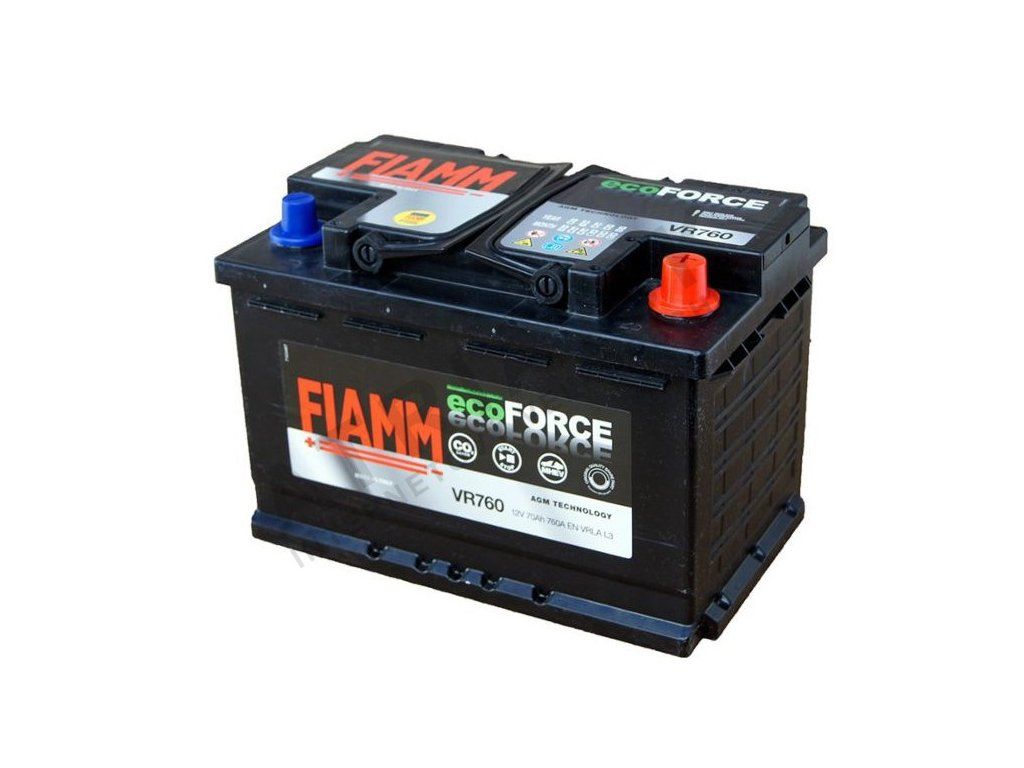 |
FIAMM ECOFORCE AGM VR 760 - a lead-acid AGM battery of the type commonly used as the storage battery in backup sources (UPS units) for boilers and circulation pumps. Thanks to its AGM construction it tolerates repeated cycling better than an ordinary starter battery and is suitable for indoor use, including a utility room, without needing extra ventilation. Price from 178.56 EUR. |
 |
Avansa 500 W - a compact generator with enough power for the boiler itself, the circulation pump and basic lighting in a utility room. A good choice if you want a backup at home for a longer outage without investing in a bigger, more expensive setup. Price from 199.51 EUR. |
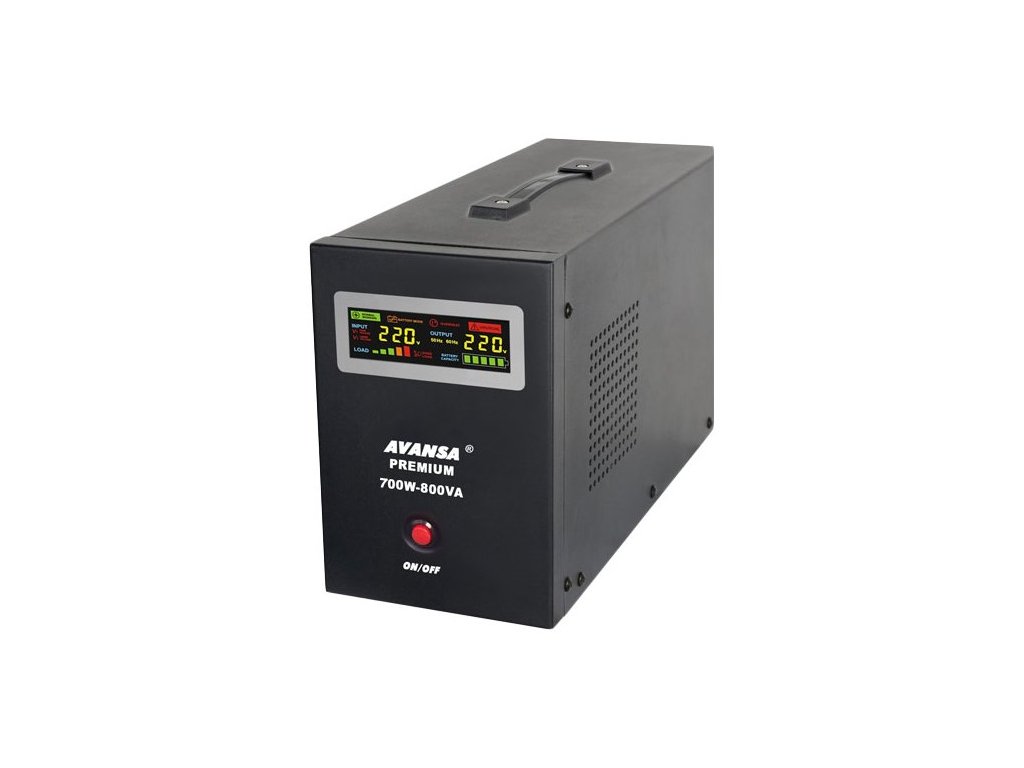 |
Avansa 1050 W - a more powerful generator, suitable if, besides the boiler and pump, you also want to power a fridge, a well pump, or several smaller household appliances at once during a longer outage. The higher rated output gives a reserve for the inrush current of motor-driven appliances too. Price from 385.33 EUR. |
A practical example from an ordinary household
Imagine a family house with a condensing boiler, both underfloor and radiator heating, and a circulation pump drawing around 60 W, plus the boiler's control electronics drawing under 40 W. Total draw during normal operation is therefore around 100 W. During a short outage, of the kind that happens several times a year in that location and typically lasts 20 to 90 minutes (for example during a storm or an overloaded local network), a small backup source with one AGM battery is enough - it covers the outage without anyone in the house even noticing, the boiler keeps running and the room temperature doesn't even drop.
If, once every few years, a longer outage occurs due to line damage after a windstorm, lasting several hours up to a whole day, the capacity of a small battery wouldn't be enough. In that case the generator steps in - the owner starts it up during the day, connects the boiler and the fridge, and tops up fuel as needed until power is restored. Combining both devices in this case means the first several tens of minutes of an outage pass completely unnoticed (thanks to the UPS), and only during a genuinely long outage does one manual step become necessary (starting the generator), instead of an emergency solution repeated from the very first minute.
What to watch out for when choosing
For a backup source, the key thing to check is the compatibility of the output voltage and waveform (a pure sine wave is safer for boiler electronics than a modified sine wave, which can cause error messages on more sensitive control boards). Just as important is the battery capacity in relation to your specific boiler's actual draw - it's worth checking the boiler's technical sheet or simply measuring the draw with a wattmeter at the socket. Batteries have a limited lifespan (typically 3 to 5 years with ordinary cycling), so plan on having to replace them eventually - a good backup source always has a replacement battery available as a separate part.
For a generator, you need to think about where it's operated - the combustion engine produces exhaust fumes as well as noise, so the generator must always run outdoors or in a well-ventilated space, never in a closed garage or utility room. It's also important to think through how it's connected to the boiler - the simplest way is an extension cable straight into a socket, but for a more permanent solution it's worth having an electrician install a transfer switch system that prevents the mains and the generator from being connected at the same time (so-called back-feeding into the grid is dangerous for utility workers and is also prohibited by law without an approved transfer switch).
Overview of steps for choosing a solution
Summary recommendation
If your location mostly experiences short, occasional outages lasting from a few minutes to a few hours, and what matters most to you is that the boiler keeps running even at night without you having to get up and connect anything, a backup source (UPS) with a good-quality AGM battery is clearly the more practical and cheaper choice. If, on the other hand, you're dealing with the risk of multi-day outages after disasters, or you also want to power other household appliances during an outage (fridge, pump, lighting), a generator is a necessary addition - ideally combined precisely with a backup source, which bridges the first minutes and gives you time to calmly start and connect the generator.
Frequently asked questions
Can I connect both a backup source and a generator at the same time?
Yes, but never directly to the same circuit without proper transfer switching - connecting the mains and a generator simultaneously is dangerous (risk of back-feeding) and in many cases also against regulations. In practice it works like this: the backup source stays plugged into an ordinary socket and takes over the first minutes of the outage, and only afterwards, once the mains is verifiably without power, is the generator manually connected in place of the mains - never alongside it.
Is a small backup source enough for underfloor heating with several zones?
It depends on how many circulation pumps and zone valve heads the system has - each added zone increases the total draw. For multi-zone underfloor heating you therefore need to add up the draw of all the components (boiler, main and zone pumps, control unit) and choose sufficient battery capacity accordingly, or several batteries in parallel.
Can a generator be used to run the boiler directly, without a backup source?
Yes, a generator can power the boiler on its own - the only limitation is that the switchover isn't automatic. The boiler switches off during the outage and only starts up again once the generator is connected, so a short outage lasting a few minutes will always register to the boiler as a restart (a new initialisation, and possibly the need to reset the time on the thermostat).
How long does an AGM battery in a backup source last before it needs replacing?
The typical lifespan of a good-quality AGM battery with correct use (regular charging, not deep discharge to zero) is around 3 to 5 years. A sign that the end of its life is approaching is a shorter runtime during an outage compared to its original state - that's when it's time to replace it, ideally before the next real outage comes.
Is generator noise a problem for neighbours in a family-house development?
In a typical denser development, yes, a combustion engine is audible for tens of metres. That's why a generator is usually only used when genuinely needed (a longer outage), not as a permanent solution running for hours unnecessarily - and it shouldn't run at night without reason, which is exactly where a silent backup source has the advantage.
Is it worth investing in both solutions at once, or is that unnecessary duplication?
For households with an elevated risk of outages (rural locations, end of the line, frequent storms), the combination is worth it - it's not duplicating the same function, but covering two different scenarios (a short automatic outage vs. a long, manually handled outage). In locations where outages only happen exceptionally, a backup source alone may be enough as a cheaper safeguard for ordinary short situations.
Related topics
- How to choose a backup source for a boiler
- How much backup power do I need
- How long does a backup source last during a power outage
- Maintenance and replacement of a backup source battery
You can find the whole range in the category Backup power sources for boilers, pumps.
Do you have a question on this topic?
Can't decide, or dealing with a specific situation in your household? Write to us - we're happy to help.