
PEX-AL-PEX vs. Copper vs. Steel Pipe
Pipework is one of those things in a house that you only notice when something goes wrong - when there's too little hot water, when you hear a rumbling sound behind the wall, or when a damp stain appears on the ceiling under the bathroom years later. Yet it is exactly this pipework that distributes hot or cold water between the source (boiler, water meter) and individual outlets - radiators, fittings, underfloor heating. It is an inconspicuous but crucial part of the installation, one that, once bricked in or cast into a screed, can practically not be repaired without demolition.
That is exactly why it pays to give pipe selection the same attention as choosing a boiler or radiators. On the market today you will commonly come across three basic materials - plastic-aluminium PEX-AL-PEX, traditional copper pipe, and steel pipe, which is now used only marginally. Each has its place, advantages, and limitations, and the choice between them affects not only the cost of the installation, but also its lifespan, pressure losses in the system, and how demanding (and expensive) any installation or repair will be.
In this article we will go through the differences between PEX-AL-PEX, copper, and steel pipe, how to choose the right diameter, when concealed and when surface-mounted routing makes sense, why an oxygen barrier is almost essential for a heating circuit, the common ways of jointing pipe, and when it is worth investing in thermal insulation of the distribution system. At the end you will find two real-world examples and answers to the most frequently asked questions.
PEX-AL-PEX, copper, or steel pipe? A basic overview of materials
The first question most people renovating or building new ask is simple: which pipe material should I actually choose? The answer depends on the type of installation (underfloor heating, radiator distribution, drinking water supply), on the budget, and on who will be doing the installation.
PEX-AL-PEX (multilayer plastic-aluminium pipe) is today probably the most widely used material for new heating and underfloor heating installations. It combines an inner and outer plastic layer with a middle aluminium layer. This aluminium layer has two essential functions - first, it prevents oxygen from diffusing into the water, which is extremely important in closed heating circuits (more on this below in the section on the oxygen barrier). Second, the aluminium gives the pipe so-called shape memory - once bent into the required shape, the pipe holds that shape going forward, which significantly simplifies installation, especially when routing under tiles, in wall chases, or around obstacles. Thanks to the combination of plastic and metal, PEX-AL-PEX is also lighter than purely metal pipe and easier to cut and bend directly on site.
Copper pipe, by contrast, is a traditional, proven material with a long history of use in both heating and plumbing technology. Its main strength is high resistance to temperature and pressure - copper retains its properties over the long term even under repeated thermal stress. The downside is a higher material cost compared to plastic-aluminium alternatives, and more demanding installation - copper pipes are usually joined by soldering, which requires not only skill but also an open flame right at the installation site. This makes the installation slower and, in some spaces (for example occupied apartments or spaces with flammable materials), more complicated from a safety and work-organisation standpoint.
Steel pipe is used today only in exceptional cases in typical home installations - typically it means older, not-yet-replaced pipework from the original construction, or specific industrial applications requiring different properties than a typical house. The main problem with steel pipe is its susceptibility to corrosion from the inside unless the water in the system is properly treated (for example freed of dissolved oxygen and aggressive substances). Corrosion is in fact the most common reason old steel pipework gets replaced with more modern materials during renovation - rust gradually narrows the pipe bore, reduces flow, and in the worst case can lead to leaks and failures.
Comparison of the three most common pipe materials by the properties mentioned in the article.
Summed up in one sentence: for most new heating and underfloor heating installations, PEX-AL-PEX makes the most sense today thanks to its combination of price, easy installation, and oxygen barrier; copper has its place where maximum durability or the aesthetics of visible pipework are valued; and steel is practically never specified for new projects.

PEX-AL-PEX pipe 16 x 2 for heating, underfloor heating and water
Multilayer plastic-aluminium pipe with an oxygen barrier, 16 mm diameter, universal use for water and heating. Especially suitable for individual underfloor heating circuits.
Price: €0.66/m
What pipe diameter do you need?
A larger pipe diameter means a higher price per metre, as shown by the specific products in the article.
Material is only the first half of the decision - the second is the correct pipe diameter. The diameter is chosen based on the required water flow and the length of the run, and it's not something you can afford to get wrong in the design. Pipe that is too narrow causes high pressure losses and noise from flowing water - in practice this sounds like rushing or gurgling in the walls, especially with higher demand (for example when the shower and washing machine run at the same time). Conversely, unnecessarily wide pipe increases the cost of the installation (more material, larger fittings) and slows down the arrival of hot water at the appliance, because wider pipe simply holds a larger volume of water that first has to be heated and delivered to the tap.
In practice, pipe with a 16 mm diameter is commonly used for underfloor heating and individual heating circuits - that's the standard you'll encounter with most underfloor heating manifolds. For main riser distribution, meaning where several circuits combine or where the pipe runs over longer distances with higher total flow, larger diameters are used instead, typically 20 to 26 mm or more. The reason is simple - the main run has to handle the sum of the flows from all the circuits branching off it, so it needs a larger bore to keep the pressure loss within reasonable limits.
So the design isn't about choosing "as thick as possible, just to be safe" - a properly sized system combines a smaller diameter where it's sufficient (individual circuits) and a larger diameter where it's genuinely needed (main distribution). If you're not sure which diameter you need for your specific case, see the detailed guide What pipe diameter do I need, where this topic is covered in even more depth.

PEX-AL-PEX pipe 26 x 3 for heating, underfloor heating and water
Same construction as the smaller 16 mm variant, but with a larger 26 mm diameter - suitable for main riser distribution and sections with higher water flow, where several circuits combine.
Price: €1.62/m
Concealed vs. surface-mounted routing - where to run the pipework
Another important decision doesn't just concern material and diameter, but also where and how the pipework will be routed. You essentially have two options - concealed or surface-mounted routing - and each has its place in a different type of space.
Concealed routing means the pipe is embedded in the wall or floor, under plaster or under screed. The result is an aesthetically clean solution - in living spaces you see no pipes at all, and the walls and floors look seamless. This aesthetic advantage does have a flip side, though - if a leak occurs anywhere along the pipe run, repairing it requires breaking open the wall or floor just to reach the damaged spot. That's why concealed routing calls for much greater emphasis on the quality of the material, the joints, and a thorough pressure test before the pipe is cast in or bricked over (more on the pressure test in the guide Pipe installation - procedure and pressure test).
Surface-mounted routing, on the other hand, leaves the pipe visible, run along the surface of the wall - often in protective trunking, sometimes completely exposed. The advantage is simpler and faster installation, and above all that any repair or rerouting is much easier - a technician has free access to the pipe without demolition. The downside is a less attractive appearance, which is why surface-mounted routing is used mainly in technical spaces where aesthetics aren't a priority - the boiler room, cellar, garage, or utility room.
In practice, both approaches are often combined within a single building: main distribution in the boiler room or utility room surface-mounted (for easy servicing), and runs heading into living rooms concealed or embedded in the screed (for aesthetics). A more detailed comparison of both solutions with specific recommendations can be found in the article Concealed vs. surface-mounted routing.
Oxygen barrier - why it's essential for heating pipe
If there's one place in this article worth slowing down and paying extra attention to, it's the oxygen barrier. This is a layer within the pipe wall that prevents atmospheric oxygen from penetrating through the pipe wall into the closed heating circuit. Most often it consists of an aluminium layer in PEX-AL-PEX pipe, or a special EVOH layer in PE-RT type pipes.
Why does this matter? A heating circuit is a closed system in which the same water circulates for months and years. Without an oxygen barrier, atmospheric oxygen would gradually diffuse through the wall of ordinary plastic pipe directly into the heating water. This dissolved oxygen then causes corrosion of every metal part of the system it comes into contact with - the boiler, the circulation pump, the radiators, and any steel sections of the distribution system. The result is gradual wear of expensive system components, contamination of the water with corrosion products (which can clog filters and valves), and ultimately a shortened lifespan for the whole heating system.
That is exactly why an oxygen barrier is practically essential for pipe intended for heating - meaning not just for drinking water distribution, but for water circulation in a heating circuit. If you're planning underfloor heating or a radiator system, you should not use pipe without an oxygen barrier in a closed circuit at all, no matter how cheap or available it otherwise is. A more detailed explanation and the technical background can be found in the separate article Oxygen barrier - why it matters for heating pipe.

HEPWORTH pipe for underfloor heating, 16 mm
PE-RT pipe with an oxygen barrier, designed specifically for underfloor heating - a suitable alternative to PEX-AL-PEX where you want a purely plastic solution with protection against oxygen diffusion.
Price: €1.48/m
How pipe is joined - compression joints, press joints, and welding
The choice of jointing method depends on installation speed and whether the joint needs to be taken apart later.
The choice of pipe jointing method affects the speed of installation, its cost, and how easily the system can be serviced or modified in the future. In practice you will most often come across three approaches.
Compression joints are secured mechanically - with a union nut and a sealing ring. The biggest advantage of this solution is that the joint can be taken apart and reassembled at any time without special tools. This is especially valuable during servicing, when a valve needs replacing, a new appliance needs connecting, or a run needs rerouting - you simply unscrew it, make the adjustment, and screw it back together.
Press joints, by contrast, are created with special pressing tongs that permanently deform a metal sleeve around the pipe and fitting. The advantage is speed of installation at scale - on larger installations with dozens of joints, pressing is significantly faster than fitting compression joints one by one. The joint is also permanent, i.e. non-detachable - an advantage for system reliability, but it also means that any future modification requires cutting the section out and fitting a new fitting, rather than simply taking it apart. The downside of the press method is the required investment in pressing tools, which pays off especially with a larger volume of work.
Welding, used mainly for plastic PP-R pipe, joins the pipe and fitting by fusing the material. The result is a homogeneous, permanent joint - what were originally two pieces essentially become one continuous whole. This jointing method is common for both cold and hot water distribution, wherever PP-R pipe is used.
Which method is "best" depends on the specific situation - for smaller home repairs and where you expect future modifications, a compression solution makes sense; for larger installations carried out by a professional, the speed of pressing pays off; and for PP-R distribution, welding is the standard. A complete overview, including recommendations on which type of joint to reach for, can be found in the article Pipe jointing methods - compression, press, welding. If you're planning a DIY installation or just want to know what to expect, also see the guide Pipe installation - procedure and pressure test, which describes the whole process including the final pressure test before the pipe is insulated or cast in.
Thermal insulation of pipework - when it's necessary and when it pays off
The last, but equally important, aspect of designing a distribution system is thermal insulation. Sleeve-type thermal insulation, usually made of foamed polyethylene, is simply slid over the pipe and reduces heat loss along the run.
Where does insulation matter most? Above all on longer hot water or heating circuit runs that pass through unheated spaces - typically a cellar, attic, or unheated garage. Without insulation, water would noticeably cool down on its way through these cold spaces before even reaching the appliance (radiator, fitting), which in practice means a longer wait for hot water at the tap and needless energy losses throughout the heating circuit.
Insulation also matters for cold water distribution, where it serves the opposite but equally practical function - preventing moisture condensation on the pipe surface, so-called "sweating". Over time, this sweating can cause damp patches on walls, damage to surrounding materials, or simply annoying dripping from pipe run, for example, in a suspended ceiling. The investment in insulation is fairly low compared to the overall cost of the distribution system, yet the effect (lower heat losses, no sweating, fewer complaints) is noticeable in the long run. A detailed guide on which sections to insulate first and what insulation thickness to choose can be found in the article Pipe insulation - why and how to insulate distribution pipework.
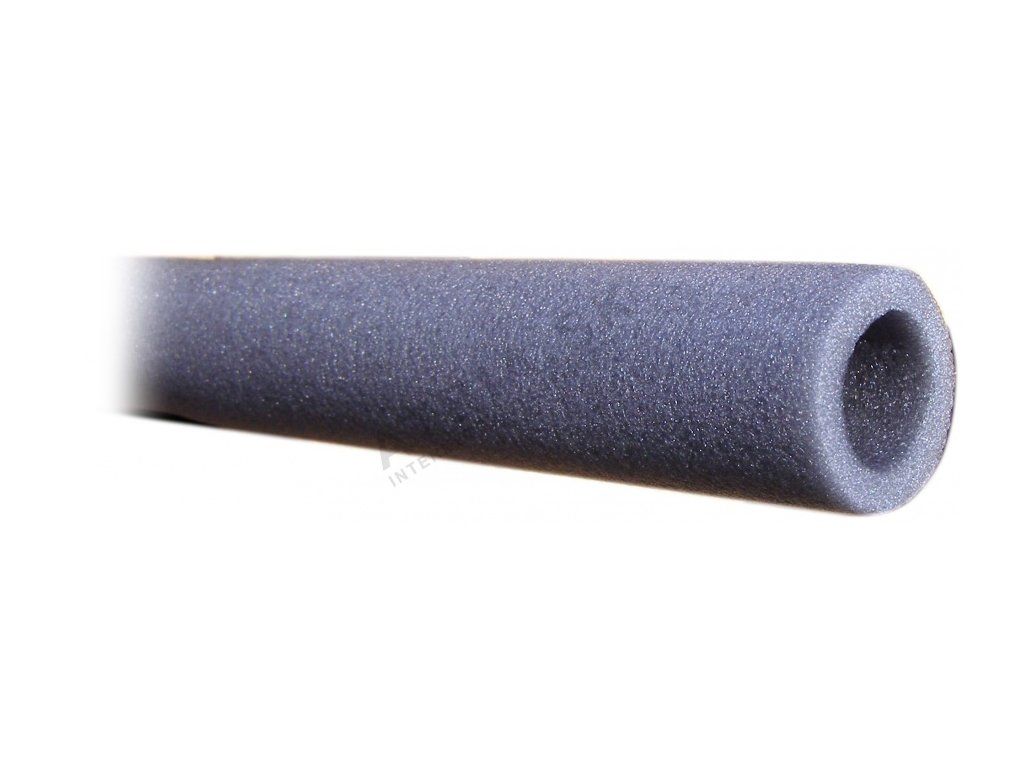
Insulation 22 mm (1/2") / 9 mm
Sleeve-type thermal insulation made of foamed polyethylene, 9 mm wall thickness, for pipe with a 22 mm diameter. Suitable for runs passing through unheated spaces and for preventing sweating on cold water pipe.
Price: €0.86
Which pipe to choose - summary by installation type
Putting all the previous sections together, the choice can be simplified into a few basic situations:
For individual underfloor heating circuits, the standard choice is 16 mm pipe with an oxygen barrier - here you can choose either PEX-AL-PEX 16 x 2, or a specialised PE-RT alternative such as HEPWORTH pipe, which is designed specifically for this type of installation.
For main riser distribution and sections with higher flow, where several circuits combine or a longer distance needs to be bridged, it's worth choosing a larger diameter, for example PEX-AL-PEX 26 x 3.
For visible distribution in technical spaces, where maximum durability and the aesthetics of metal pipe are valued, copper pipe still has its place - especially where the work is carried out by an experienced installer equipped for soldering.
Steel pipe is practically never specified for new projects - if you have it at home from an older installation, gradually replacing it with a more modern material is a measure that pays off in the long run, especially if signs of corrosion appear (reduced flow, discoloured water, rusty deposits in filters).
And finally, regardless of the material chosen, an oxygen barrier is practically mandatory equipment for a heating circuit, a correctly sized diameter saves both energy and nerves, and thermal insulation on unheated sections pays back the investment through lower heat losses. If a problem appears during the work - a leak, noise in the pipe, or a pressure drop - it's worth also checking the article Servicing and common pipework problems, which deals with exactly these situations.
Real-world examples
Example 1: New-build house with underfloor heating
In a new-build house with several rooms and underfloor heating as the main heating method, a common solution is to combine two pipe diameters. The individual circuits run in the screed under each room (living room, bedrooms, bathroom) are realised with 16 mm pipe with an oxygen barrier, connected to a manifold in the utility room. The manifold itself is then connected to the heat source (boiler) with larger-diameter pipe, for example 26 mm, because this section carries the combined flow from all the circuits at once.
If the run from the boiler to the manifold passes through an unheated space - typically a basement utility room or a partially heated garage under the house - it's worth insulating this section with sleeve insulation, so heat isn't lost before reaching the manifold and then the individual circuits. When choosing between concealed routing in living spaces (aesthetics, no visible pipes) and surface-mounted routing in the utility room (easy access to the manifold and fittings for future servicing), both solutions are commonly combined within the same building in practice.
Example 2: Renovating a bathroom/utility core in a panel building apartment
A different situation arises when renovating an older apartment in a panel building, where the original pipework is made of steel and, after decades of operation, shows signs of corrosion - reduced water flow, or discoloured water after the system has been shut off for a while. During a complete renovation of the bathroom/utility core (bathroom, toilet, kitchen), the old steel pipework is usually replaced entirely, most often with modern plastic-aluminium pipe or, in some cases, copper, depending on the preference of the owner and the installation company.
Since this is an occupied apartment in a residential building, where speed of execution is emphasised (limited time without water, neighbours in surrounding apartments), a press jointing method is often chosen in such cases - installation is faster than with compression joints and doesn't require an open flame directly in the apartment, which in a panel building with several neighbours is also a matter of safety and the building's operating rules. The new pipework is then routed mostly concealed, in chases cut into the wall and covered with new tiling, so the result looks just as aesthetically clean as before the renovation.
Frequently asked questions (FAQ)
Can PEX-AL-PEX pipe also be used for drinking water distribution, or only for heating?
Yes, PEX-AL-PEX is a universal pipe suitable for distributing drinking and domestic water as well as for heating circuits and underfloor heating. The oxygen barrier this pipe has thanks to its aluminium layer doesn't interfere with drinking water distribution - on the contrary, for heating this property is almost essential.
Without an oxygen barrier, oxygen ingress gradually leads to corrosion and a shorter system lifespan.
Why can't I use ordinary plastic pipe without an oxygen barrier in a heating circuit?Without an oxygen barrier, atmospheric oxygen would gradually diffuse through the pipe wall directly into the heating water, which circulates in a closed circuit for months and years. The dissolved oxygen then causes corrosion of the system's metal parts - the boiler, the pump, the radiators, and any steel sections of the distribution - shortening the lifespan of the whole heating system.
Is it still worth installing copper pipe today, or is it an outdated solution?
Copper pipe still has its place where its high resistance to temperature and pressure is valued, or the aesthetics of visible metal pipework in technical spaces. However, it is more expensive than plastic-aluminium alternatives, and soldered installation requires more skill and an open flame, which is why it is increasingly being replaced by PEX-AL-PEX in typical home installations.
How do I know if I have old steel pipework at home and should consider replacing it?
Typical signs of corrosion in steel pipe are reduced water flow compared to the past, discoloured (rusty) water especially after the system has been shut off for a while, or deposits in fitting strainers and filters. Steel pipe is not commonly specified in new projects today precisely because of its susceptibility to corrosion from the inside.
What pipe diameter do I need for a typical house with underfloor heating?
For individual underfloor heating circuits, a diameter of 16 mm is commonly used. For the main run from the boiler to the manifold, where flow from several circuits combines, a larger diameter is chosen, usually 20 to 26 mm, depending on the length of the run and the total required flow.
Do I need to insulate pipe that is entirely routed within a heated room?
Thermal insulation matters most on runs passing through unheated spaces (cellar, attic, garage), where without it there are noticeable heat losses before the water even reaches the appliance. For runs entirely within heated rooms this need is lower, but for cold water distribution insulation also solves the problem of sweating (moisture condensation) on the pipe surface.
Can a press joint be taken apart for repair after years of use?
No - a press joint is permanent by design (non-detachable); the metal sleeve is permanently deformed around the pipe and fitting by pressing tongs. If a modification is needed, the section is cut out and a new fitting is installed. If you expect to frequently take joints apart and reassemble them in the future, a compression solution is more suitable.
Is concealed routing always a better choice than surface-mounted?
Not automatically - concealed routing is an aesthetically cleaner solution suitable for living spaces, but requires breaking open the wall or floor in the event of a fault. Surface-mounted routing is less attractive but simpler to install and repair, which is why it is commonly used in technical spaces such as the boiler room, cellar, or garage, where easy access for servicing is the priority.
Related topics
- How to Choose Pipework for Water and Heating
- What pipe diameter do I need
- Concealed vs. surface-mounted routing
- Oxygen barrier - why it matters for heating pipe
- Pipe jointing methods - compression, press, welding
- Pipe insulation - why and how to insulate distribution pipework
- Pipe installation - procedure and pressure test
- Servicing and common pipework problems
- Frequently asked questions about pipework for water and heating
Have a question about water or heating pipework?
Can't decide, or dealing with a specific situation in your home? Write to us – we're happy to help.