
Ways of joining pipe – screwed, press, welded
When dealing with water or heating piping in a family house, a flat, or during a bathroom renovation, most people focus mainly on the pipe material – that is, whether to choose PEX-AL-PEX, copper, or plastic PP-R pipe. An equally important question, which is however often only decided at the last moment directly with the installer, is the method of joining the pipe. Joints are in fact the weakest point of any piping system – most leaks and failures don't occur in the middle of a straight pipe, but exactly at the point of a joint with a fitting, elbow, T-piece or manifold.
Pipe for water and heating carries hot or cold water between the source (boiler, water meter) and the individual points of use – radiators, taps, underfloor heating. The choice of material and diameter affects the lifespan of the run, pressure losses, ease of installation and the overall cost of the installation, but it is precisely the method by which individual pipe sections are connected to each other that decides whether the run will last for decades without intervention, or will require regular checking and possible re-tightening.
Overview of the three main ways of joining pipe covered in the article.
In practice today we encounter three main ways of joining pipe: the screwed (compression) joint, the press joint, and welding. Each has its place depending on what pipe material is used, exactly where the run will be routed, and whether future servicing or a route change needs to be planned for. In this article we go through all three methods step by step, their advantages and disadvantages, and advise which method suits which situation – from underfloor heating in a new-build to replacing a riser in a panel building. If you're also dealing with the choice of material itself, also read the article How to choose pipe for water and heating, which only touches on joining methods briefly and so complements this topic.
Why the joining method matters just as much as the material
The pipe itself – whether PEX-AL-PEX, copper, PP-R, or, in older buildings, steel – can reliably withstand the pressure and temperature of the water along the entire length of a straight section. The problem always arises where two pieces of pipe, or pipe and a fitting (a fitting, elbow, valve, manifold), have to be joined into one tight whole. The joint must be strong enough to withstand pressure loading and thermal expansion of the material, and at the same time perfectly tight, so that no slow seepage occurs either – seepage that often only shows up after months or years of operation – typically as a damp stain on a wall or ceiling, or a drop in pressure in the heating circuit.
The choice of joining method is also closely linked to where the pipe will be routed. With concealed routing, where the run is permanently embedded in a wall or floor screed, joint reliability is critical, because any future repair means breaking things open. Conversely, with surface-mounted routing in technical spaces such as a boiler room, cellar or garage, you can also choose a joining method that allows the joint to be easily taken apart and adjusted in the future. We cover this topic in more detail in the article Concealed vs. surface-mounted routing.
Screwed (compression) joints – a detachable connection
Screwed, or compression joints are secured mechanically – with a union nut and a sealing ring, which are tightened onto a fitting or directly onto a fixture. The main advantage of this type of joint is that it can be taken apart and reassembled at any time without needing special tools – an ordinary spanner or adjustable wrench is enough. You will especially appreciate this during servicing, when a valve needs replacing, a new appliance needs connecting to the run, or a particular circuit needs to be temporarily disconnected to repair another part of the system.
Screwed joints are therefore typically used in places where future handling is anticipated – connecting the boiler to the run, connecting a radiator with a thermostatic valve, connecting an underfloor heating manifold, or a water-meter assembly. It is precisely at underfloor heating manifolds that compression (screwed) fittings with a union nut are a common solution – they allow each loop to be precisely tightened on site without needing special pressing tools.
The disadvantage of screwed joints is that they require regular checking of tightness – the sealing ring can lose its elasticity over time, especially with fluctuations in heating water temperature, and the joint may start to seep slightly. That's why, in places without easy access for inspection (for example in the floor under screed), screwed joints are generally not used, and a permanent solution is preferred instead.

PEX-AL-PEX pipe 16 x 2 for heating, underfloor heating and water
Multilayer plastic-aluminium pipe with an oxygen barrier, 16 mm diameter, universal use for water and heating. Commonly connected with screwed (compression) fittings with a union nut, for example on underfloor heating manifolds, where individual circuits need to be precisely tightened and, if needed, disconnected again.
Price: €0.66/m
Press joints – fast installation on a larger scale
Press joints are created using special pressing pliers that permanently deform a metal sleeve around the pipe and fitting. The resulting joint is permanent, non-detachable, and thanks to the mechanised installation, also faster to fit on a larger scale – in a more extensive run, where dozens of metres of pipe and a number of elbows or T-pieces need to be joined, an experienced installer can save a substantial amount of time compared to screwing each joint individually.
Investing in pressing tools is generally more than would be worthwhile for a homeowner doing a one-off installation, so press joints are typically done by a professional installation company that has the tools on hand and uses them across multiple jobs. For the client, this means a somewhat higher labour cost, offset by greater reliability and speed of installation.
Thanks to their permanent and reliable nature, press joints are the first choice wherever concealed or under-floor routing is planned – exactly where a future leak would mean breaking open a wall or screed. On main riser lines with a larger diameter and higher water flow, press joints are combined with larger-diameter pipe, which also has a higher mechanical load at the joint.

PEX-AL-PEX pipe 26 x 3 for heating, underfloor heating and water
Larger 26 mm diameter, suitable for main riser lines with higher water flow. At this diameter and type of use, concealed routing is most often combined with press joints, which guarantee a permanent and reliable connection with no need for future tightness checks.
Price: €1.62/m
Welding pipe – a homogeneous joint for plastic runs
Welding is used mainly with plastic PP-R pipes and joins the pipe and fitting by melting the material – heat locally melts both parts, and once joined and cooled, they form one homogeneous piece of material, without any mechanical element (a nut, a sleeve) at the joint. This method is common for both cold and hot water distribution, where PP-R pipe is often used precisely because of the simple and cheap installation by welding.
The advantage of a welded joint is that, once properly made, there is no mechanical part that could loosen or lose elasticity over time, unlike a screwed joint with a sealing ring. The disadvantage is that welding requires mastering the technique and correct timing – too short a heating time creates a weak joint, while too long can narrow the pipe diameter at the joint by melting the material inward. That's why welding, too, is best left to an experienced installer, even though the tool itself (a plastic pipe welder) is more affordable than pressing pliers.
For heating circuits, where PEX-AL-PEX is used in the vast majority of cases precisely because of the oxygen barrier and shape memory, welding is not encountered – this method is mainly the domain of cold and hot water distribution made from PP-R material, or combined installations where PP-R is used for the main run and individual points of use are connected with a different material.
Which joining method belongs to which pipe material
The choice of joining method is closely linked to the pipe material used in the specific run. PEX-AL-PEX, i.e. multilayer plastic-aluminium pipe, combines an inner and outer plastic layer with a middle aluminium layer – aluminium prevents oxygen diffusion into the water, which matters especially in closed heating circuits, and at the same time gives the pipe shape memory, so it holds its shape after bending without needing further fixing. PEX-AL-PEX is joined either with screwed or press fittings, depending on whether future disassembly is anticipated (screwed) or permanent concealed routing (press). You'll find a detailed comparison of materials in the article PEX-AL-PEX vs. copper vs. steel pipe.
Copper pipe is a traditional material, very durable against temperature and pressure, but more expensive, and its installation – soldering – requires more skill and work with an open flame. In principle, soldering copper is closer to welding than to mechanical joining, since the joint is created by melting a soldering material (tin, or a silver-copper alloy) at the point of contact between the pipe and fitting, and the resulting joint is again permanent and non-detachable.
Steel pipe is used today only exceptionally – in older installations or industrial applications – because it is prone to corrosion from the inside without proper water treatment. Steel runs have historically used threaded (screwed) joints with hemp packing or PTFE tape, and in newer industrial applications, welding too. In a typical family house or flat renovation today, steel pipe is encountered only when removing the original, worn-out run.
PP-R plastic pipe, which is joined by welding, is most often used for cold and hot tap water distribution, less often directly for the heating circuit – precisely because ordinary PP-R does not have an oxygen barrier comparable to PEX-AL-PEX, which is an important parameter in a closed heating system.
Pipe diameter also affects the choice of joint and fittings
Comparison of prices of selected pipes mentioned in the article.
Pipe diameter is chosen according to the required water flow and the length of the run. For underfloor heating and individual circuits, 16 mm is commonly used; for main riser lines or longer sections with higher flow, a diameter of 20 to 26 mm and above is used. Pipe that is too narrow causes high pressure losses and noise as the water flows, while unnecessarily wide pipe increases installation costs and slows the arrival of hot water at the fixture. More on this topic in the article What pipe diameter do I need.
As pipe diameter increases, so do the demands on joint quality and reliability – with a larger diameter, a bigger area and a bigger volume of water act on the joint, meaning higher demands on the fitting's mechanical strength. That's why, at diameters around 20 to 26 mm, typical for main runs, press joints are more often encountered in practice, while at the smaller 16 mm diameter, common for individual underfloor heating circuits, screwed fittings on manifolds are used just as often.
For underfloor heating specifically, besides classic PEX-AL-PEX pipe, PE-RT pipes are also encountered, which have their own oxygen barrier in the form of a special layer, and are likewise connected to the manifold with screwed (compression) fittings.

HEPWORTH pipe for underfloor heating, 16 mm
PE-RT pipe with an oxygen barrier, specifically designed for underfloor heating. Connected at the manifold the same way as PEX-AL-PEX – most often with screwed (compression) fittings with a union nut, which allow precise adjustment and any future changes to individual circuits.
Price: €1.48/m
Concealed vs. surface-mounted routing – impact on the choice of joint
The routing method determines which type of joint is appropriate.
Concealed routing is pipe embedded in a wall or floor under plaster or screed. It looks aesthetically clean – once construction is finished, no run at all is visible – but in the event of a fault, that is a leak, requires breaking open the wall or floor to fix it. It is precisely with concealed routing that it is extremely important to choose a joining method that minimises the risk of a future leak – in practice this almost always means a press joint, or welding for plastic runs, never a screwed joint, which might need retightening over time without the possibility of access.
Surface-mounted routing, by contrast, is visible, run along the surface of the wall – often in trunking or completely openly. Installation and any repair are simpler, since the pipe is always directly accessible, but visually it is a less attractive solution, so it is used mainly in technical spaces such as a boiler room, cellar or garage. It is precisely in these spaces, where the run is freely accessible and any inspection or adjustment doesn't take long, that it pays to choose screwed joints – they allow easy connection of further appliances or fittings in the future without having to cut the pipe. You'll find a full comparison of both routing methods in the article Concealed vs. surface-mounted routing.
The oxygen barrier in heating pipe
The oxygen barrier – most often an aluminium layer in PEX-AL-PEX, or a special EVOH layer in PE-RT pipes – prevents atmospheric oxygen from penetrating through the pipe wall into a closed heating circuit. Without this barrier, oxygen would gradually diffuse into the heating water and cause corrosion of the system's metal parts – the boiler, pump, radiators, or possibly steel piping. That's why an oxygen barrier is practically essential for pipe intended for heating, unlike pipe intended solely for drinking water distribution.
This parameter is also indirectly linked to the joining method – with quality pipe that has an oxygen barrier, it makes sense to invest in a quality, reliable joint too, since it is precisely the combination of both factors (pipe material and joining method) that determines the overall lifespan and trouble-free operation of the heating circuit. You'll find more on the oxygen barrier in the article Oxygen barrier – why it matters in heating pipe.
Thermal insulation of pipe and its effect on joint lifespan
Sleeve-type thermal insulation, usually made of foamed polyethylene, is slipped over the pipe and reduces the heat loss of the run. It matters especially for longer runs of hot water or heating circuit routed through unheated spaces, such as a cellar or attic, where without insulation the water would noticeably cool down on its way to the fixture. For cold water runs, insulation instead prevents condensation of moisture on the pipe surface, i.e. sweating.
Insulation also has an indirect, but real effect on joint lifespan – sleeve-type insulation slipped over the whole length of pipe including the joint protects the fitting and the joint itself from fluctuations in ambient temperature and from mechanical damage, for example when working in a technical space. With surface-mounted routing in a boiler room or cellar, it therefore pays to insulate not only straight sections but also the areas around T-pieces and elbows, where the joint suffers most from temperature fluctuations.
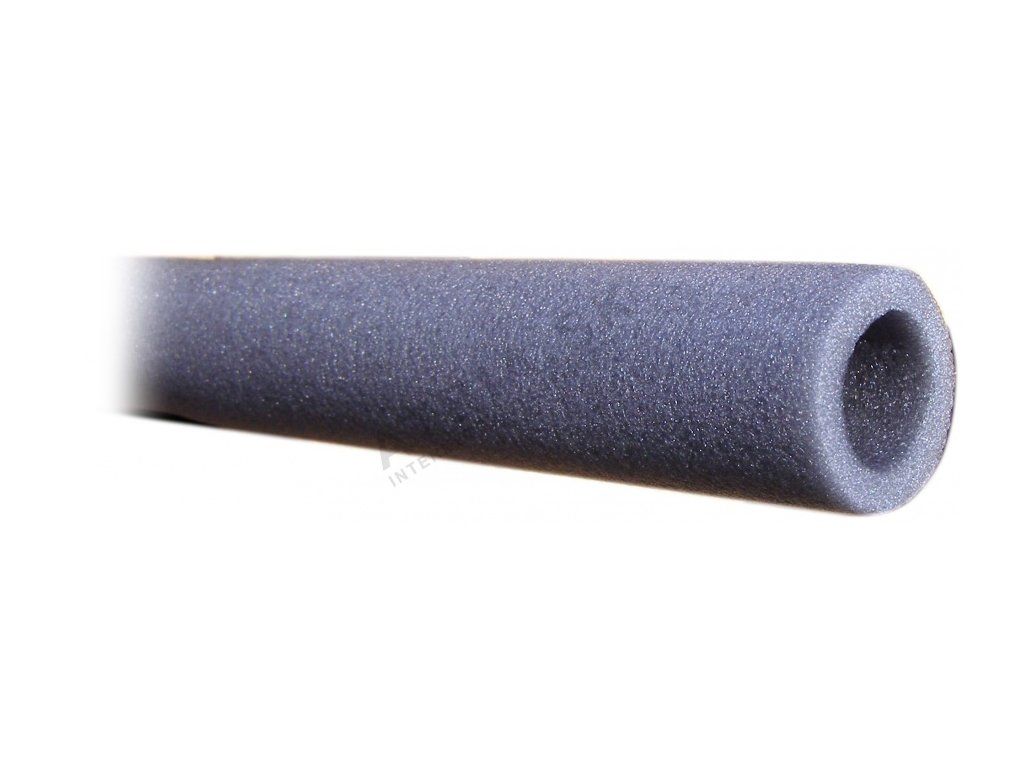
Insulation 22 mm (1/2") / 9 mm
Sleeve-type thermal insulation for pipe, wall thickness 9 mm, for pipe with a diameter of 22 mm. Suitable for surface-mounted runs in unheated spaces (cellar, garage, attic), where it protects against heat loss and, for cold water runs, against condensation.
Price: €0.86
Installation, pressure testing and servicing the run
The pressure test must take place before the run is covered.
Regardless of which joining method you choose for a specific run, one common rule applies – once installation is complete, the whole run must undergo a pressure test before concealed sections are covered with plaster or screed. The pressure test reveals any joint leak at the point when it's still easy to fix it, and not only after building work is finished. We cover the exact installation and pressure-testing procedure in the article Pipe installation – procedure and pressure test.
Even properly done installation requires at least a visual check over time, especially for screwed joints in accessible spaces. If a problem appears – dripping from a joint, a drop in heating circuit pressure, or a damp stain at a concealed run – you'll find an overview of the most common causes and the recommended procedure in the article Servicing and common problems with pipe.
Real-world examples
Family house with underfloor heating – complete heating renovation. When switching from an old radiator heating system to underfloor heating in a family house, the run from the manifold to the individual circuits in the floor was made with 16 mm PEX-AL-PEX pipe, which, thanks to its shape memory, could be shaped nicely into individual loops right during laying in the screed. At the manifold itself, all circuits were connected with screwed (compression) fittings, which allowed each circuit to be precisely tightened during the final pressure test and, if needed, temporarily disconnected and reconnected without damaging the pipe. The run from the boiler to the manifold, routed through an unheated cellar, was additionally fitted with sleeve-type thermal insulation to minimise heat loss over the longer run.
Panel-building flat – replacing a heating riser. When replacing the original heating riser in an apartment building, which had originally been made of copper pipe with soldered joints, the new section was made with larger 26 mm PEX-AL-PEX pipe, matching the higher flow on the main riser line. Since the riser is routed in a shared service duct and is not embedded directly in the flat, a screwed joint was chosen – this allows easier access for any future replacement of the riser valve without having to interrupt the whole section of pipe. Where the riser passes through the unheated space of the shared duct, sleeve insulation was likewise added.
Frequently asked questions about joining pipe
Which pipe joining method is cheapest to install?
Screwed joints generally don't require investing in special tools, since they're tightened with an ordinary spanner, so for a smaller installation they come out as the most accessible in terms of the tools needed. For a larger run, however, press joints done by a professional company can pay off more overall due to the speed of installation, and therefore the labour involved.
Can a press joint be taken apart again once pressed?
No, a press joint is by its nature permanent and non-detachable – the metal sleeve is permanently deformed around the pipe and fitting with pressing pliers. If the joint needs to be changed in the future, the relevant section of pipe has to be cut off and replaced with a new fitting and a new press connection.
Do I need special tools for screwed joints?
No, screwed (compression) joints are tightened with an ordinary spanner or adjustable wrench, which is the main reason they're popular for servicing and in places where future handling is anticipated, for example on underfloor heating manifolds.
Is welding suitable for metal pipe too, such as copper?
Welding in the strict sense is used in typical home installations mainly with plastic PP-R pipes. With copper pipe, soldering is used analogously, which corresponds in principle to welding (melting material at the joint), but requires soldering material and an open flame, not a plastic-welding technique.
Which joining method is most commonly used for underfloor heating?
For underfloor heating, individual circuits at the manifold are generally connected with screwed (compression) fittings with a union nut, which allows precise tightening as well as possible future disconnection of a specific circuit without affecting the rest of the run.
Must pipe intended for heating have an oxygen barrier?
Yes, in a closed heating circuit an oxygen barrier is practically essential – without it, atmospheric oxygen would gradually diffuse through the pipe wall into the heating water and cause corrosion of the system's metal parts, such as the boiler, pump or radiators.
Is it worth insulating pipe even in normally heated rooms?
Insulation has the greatest effect on longer runs routed through unheated spaces, such as a cellar, garage or attic, where water would noticeably cool down on its way to the fixture. For short sections within a heated room, the effect of insulation is less pronounced, but it still reduces heat loss and protects the joint from temperature fluctuations.
What pipe diameter should I choose for a family house?
For individual underfloor heating circuits, a diameter of 16 mm is commonly used, while for main riser lines or longer sections with higher flow, a diameter of 20 to 26 mm and above is chosen. The exact diameter depends on the required flow and the length of the specific run – more detail in the article What pipe diameter do I need.
Related topics
- How to choose pipe for water and heating
- PEX-AL-PEX vs. copper vs. steel pipe
- What pipe diameter do I need
- Concealed vs. surface-mounted routing
- Oxygen barrier – why it matters in heating pipe
- Pipe insulation – why and how to insulate piping
- Pipe installation – procedure and pressure test
- Servicing and common problems with pipe
- Frequently asked questions about pipe for water and heating
Have a question about pipe for water or heating?
Not sure what to choose, or dealing with a specific situation in your home? Write to us – we're happy to help.